


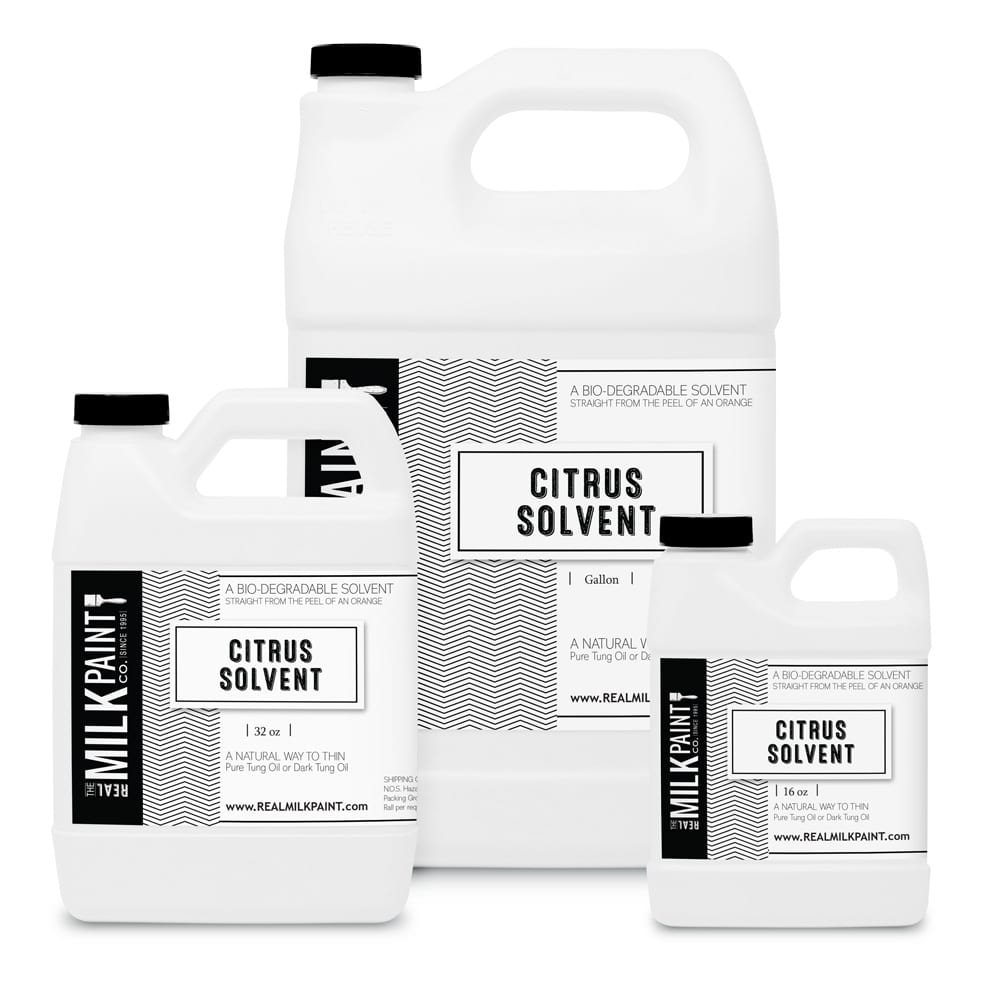

An all-natural way to thin tung oil. Will evaporate as it dries. Can also be used as a concentrated cleaner.
Orange Oil Natural Citrus Solvent
From: $23.99
Product Description
A Safer Paint & Oil Thinner Alternative
Orange Oil as a Natural Citrus Solvent is used as a direct replacement for mineral spirits and chlorinated solvents. Citrus Solvent can be used wherever paint thinner or mineral spirits are required as a natural, safer alternative. Citrus Solvent is not the same as any of the other “citrus-branded” cleaning products on the market, including Citrus Solve or Citri-Solve. It is a versatile product that can be an excellent grease trap cleaner, paint thinner alternative, and can be used to replace petroleum chemicals such as mineral spirits.
Orange Oil Citrus Solvent is 98% pure citrus peel oil extracted from the peel of the orange fruit; the other 2% is water. This small amount of water is emulsified in the solvent and will not raise wood grain but is released into the air as the solvent evaporates.
Advantages
- Does not contain any emulsions, surfactants, or any other additives that paint thinner products contain
- Does not contribute to the depletion of the upper ozone or smog like mineral spirits or paint thinner
- The material released into the air by our Citrus Solvent is essentially the same material that is continuously being released into the air in every orange grove and is gently returned to the earth with the rain
- As clear as ordinary water as opposed to the deep orange of lower grades, which means that it will not add more amber color when mixed with our Pure Tung Oil
- Unlike paint thinner, our Citrus Solvent does not cause damage to the internal organs of the body when breathed in; instead, it passes through without effect. As a matter of fact, when you drink orange juice from the store, you drink small amounts of orange peel oil from the peel from which the juice was squeezed!
- Can be easily disposed of with no threat to the environment when done properly. We recommend pouring any unwanted Citrus Solvent onto cardboard, cat litter, or another absorbent material. This then allows the solvent to evaporate. Once the material is dry, dispose of according to local guidelines with other waste.
- Packaged in fully recyclable HDPE bottles that are BPA and Phthalate-free.
Uses & Applications
- As a straight solvent, the citrus natural solvent is a paint thinner alternative that can replace a wide variety of potentially harmful chemical products. Mineral spirits, methyl ethyl ketone, acetone, toluene, glycol ethers, and fluorinated or chlorinated organic solvents are all caustic chemicals that can be detrimental to health.
- Citrus Solvent can be used as an effective replacement for toxic chlorinated solvents, glycol ether, MEK (methyl ethyl ketone), xylene, and Freon.
- Its cleaning and degreasing properties make it a wonderful alternative to CFC-laden cleaners, engine degreaser (automotive, aircraft, and aerospace industries)), ceramic tiles cleaner, tar and asphalt remover, asbestos shingle remover, graffiti remover, grease traps maintainer, and lift station and sewage treatment applications. This versatile product can be used for general cleaning, heavy industrial cleaning, restroom cleaning and more.
- It is also perfect for light-duty cleaning to remove waxes and oil residues off surfaces of items to prepare for painting or finishing.
- The specific industrial applications for Citrus Solvent are virtually endless:
- Printing press cleaner
- Carpet stain cleaner
- Metal cleaner
- Aerosol ingredient
- Fragrance additive
- Deodorant for petroleum
- Heat transfer medium
- Sewage treatment plants apply septic tanks and other non-collective sanitation systems
- It’s even a possible candidate for a variety of medical applications
Orange Oil Citrus Natural Solvent vs. Mineral Spirits
Citrus Natural Solvent is an excellent Alternative to Odorless Mineral Spirits
Odorless mineral spirits are a sub-category of mineral spirits, a widely used paint thinning substitute for turpentine. First developed for the dry cleaning industry and known as Stoddard solvent, mineral spirits have been around since the 1920s.
Mineral spirits is a mild petroleum distillates with low volatility. It is typically used today for lubrication, cleaning, and degreasing. The variety of mineral spirits most commonly used in painting is type II odorless mineral spirits. With the following of certain precautionary measures, the use of both mineral spirits and odorless mineral spirits is considered safe for cleaning applications. While odorless mineral spirits are treated to remove the aromatic elements, the Occupational Health and Safety Administration (OSHA) still advises of potential health effects associated with the use of all types of mineral spirits. These effects include eye and skin irritation, as well as dangers from inhalation or ingestion. Prolonged exposure, such as the repeated use of odorless mineral spirits in the workplace, can lead to organ damage.
Real Milk Paint Citrus Natural Solvent is an excellent alternative to odorless mineral spirits. It is safe to use and environmentally friendly, but powerful enough to effectively do the work of odorless mineral spirits. The 98% pure citrus peel oil, 2% water formula is tough enough to remove paint, degrease, clean tar and asphalt, and a host of other challenging jobs, for which odorless mineral spirits are often used.
Citrus Natural Solvent offers the following advantages over odorless mineral spirits:
- Citrus Natural Solvent has a safe and pleasant aroma
Odorless Mineral Spirits can be harmful to the respiratory system - Citrus Natural Solvent does not contribute to smog or air pollution
Odorless Mineral Spirits release toxins that contaminate the air - Citrus Natural Solvent does not require special regulation in consumer quantizes.
Odorless Mineral Spirits must be disposed of in accordance with local regulations - Citrus Natural Solvent is 100% natural, with no emulsions or surfactants
Odorless Mineral Spirits contain potentially harmful chemical additives
History & Facts
Citrus Natural Solvent is a biodegradable, naturally-occurring solvent, as the main component is simply citrus peel oil. Citrus Solvent’s interesting chemical properties, pleasant citrus aroma, and FDA-GRAS rating, “generally recognized as safe”, (view document) have earned the product phenomenal acceptance in many diverse chemical applications. (Citrus Solvent can be used in its pure form, or blended with most other solvents, waxes, and drying oils.
Citrus Natural Solvent is the major component of the oil extracted from citrus rind. When citrus fruits are juiced, the oil is pressed out of the rind. This oil is separated from the juice and distilled to recover certain flavor and fragrance compounds. The bulk of the oil is left behind and collected as “food grade” citrus oil. After the juicing process, the peels are conveyed to a steam extractor. This extracts more of the oil from the peel. When the steam has been condensed, a layer of oil then floats on the surface of the condensed water. The result is technical grade citrus solvent, which is the main ingredient in our Citrus Solvent.
In the past decade, the use of citrus natural solvent has expanded tremendously. Much of the product goes into making paint solids, used to impart an orange fragrance to products, and used as a secondary cooling fluid. But the largest growth segment has been the use of a citrus solvent in cleaning products. This has occurred in both industrial uses and in household/institutional products. Citrus Solvent can be used either as a straight solvent or as a water-diluted product.
As with most organic orange oil solvents, the citrus natural solvent is not water-soluble, so it can be used in ordinary water separation units. With a KB value of 67, the citrus solvent has solubility properties close to that of CFCs. This fact, combined with the environmentally-friendly and non-toxic nature of the substance, is a clear indication that it is a much better alternative to typical caustic mineral spirits or paint thinners. The straight citrus solvent can be used as a wipe cleaner, in a dip bath, or in spray systems as a direct substitute for most other organic solvents.
NOTE: Orange Oil as a Natural Citrus Solvent can only be shipped through ground shipping services because of its combustibility (combustible materials need direct contact with flame/spark whereas flammable materials need only the vapor to come in contact with a flame/spark).
Mineral Spirits vs. Natural Citrus Solvent Frequently Asked Questions
How does Citrus Solvent differ from mineral spirits?
Citrus Solvent is orange peel oil. It is the natural clear liquid that is in the rind of the orange. Citrus Solvent is an organic substance, in contrast to Mineral spirits, which is created through a chemical process called “Oil Cracking”. Mineral spirits is a by-product from the manufacture of gasoline. Citrus Solvent on the other hand is a by-product of the orange juice industry from squeezing oranges. After the orange juice is squeezed the peels are then sent back to be further squeezed to extract the Citrus Solvent from the peels. The liquid is collect for other uses. Citrus Solvent does not cause any ozone depletion or contamination. Even if the orange peels were discarded the Citrus Solvent would be release to the air regardless.
How does Citrus Solvent work? Is it just like regular paint thinner?
Citrus Solvent will evaporate like paint thinner but just a little bit slower. However, the fumes are much safer.
What are the benefits of using Citrus Solvent as odorless mineral spirits?
Citrus Solvent is not odorless but does have an orange smell. Lower quality odorless mineral spirits may be more toxic than Citrus Solvent. Extended long term exposure to any and all solvents are not recommended.
Can Citrus Solvent be used for degreasing, the way mineral spirits can?
Yes, Citrus Solvent makes an excellent degreaser. In many cases it works better than mineral spirits.
Is Citrus Solvent safer to use on antiques than paint thinner?
Citrus Solvent is a good degreaser and works well for de-waxing. Citrus solvent would be safe for almost all finishes except for some delicate water base films.
Do I need to wear a mask and gloves when working with Citrus Solvent as an odorless mineral spirit?
Gloves would be good to wear if you have sensitive skin. Citrus Solvent can dry out the skin. Good ventilation is recommended if you are doing a large project. An organic filter mask is recommended for protection from odorless mineral spirits.
When using Citrus Solvent in place of paint thinner or mineral spirits, is the same amount of product used?
Yes, the exact same amount of Citrus Solvent is required in place of paint thinner or mineral spirits.
How fast does Citrus Solvent evaporate compared to paint thinner and mineral spirits?
Citrus Solvent will dry a bit slower than paint thinner or mineral spirits.
Does Citrus Solvent require as much ventilation during use as mineral spirits or paint thinner?
Ventilation would be recommended for all solvents.
Is Citrus Solvent safer to store than mineral spirits or paint thinner?
Recommended storage for Citrus Solvent would be the same as for mineral spirits and paint thinner.
What are mineral spirits?
Mineral spirits are a low volatility petroleum derivative commonly used as a substitute for turpentine for paint thinning. Originally developed in the late twenties, mineral spirits were first created as a formula for the dry cleaning industry. Today, mineral spirits are used in a number of applications as a cleaner, degreaser, and lubricant. Mineral spirits are created through the combination of various chemicals with hydrocarbons into three basic types. The most commonly used for paint applications is type II odorless mineral spirits. Although mineral spirits are considered safe as cleaner, OSHA, the Occupational Health and Safety Administration, warns of “potential acute health effects” including irritation of the skin and eyes, and the hazardous potential of mineral spirits if ingested or inhaled. Furthermore, mineral spirits are toxic to the lungs and nervous system, and “repeated or prolonged exposure” can produce “target organs damage”.
At The Real Milk Paint Company we do our best to provide safe products as well as information. However we can not guarantee that individuals with compromised immune systems or allergies will not have a reaction to our products. We strongly recommend that each person take their own personal responsibility in testing this product for their own personal use.
Citrus Solvent is a biodegradable, naturally-occurring solvent. The main ingredient (98%) is oil found in orange peels (the other 2% is residual water from the steam extraction process). Citrus Solvent’s interesting chemical properties, pleasant citrus aroma, and FDA-GRAS rating (Generally Recognized As Safe) have earned the product phenomenal acceptance in many diverse chemical applications.
Citrus Solvent Safety Data Sheet (SDS)
Download the Citrus Solvent Safety Data Sheet


